WAYS TO TRY IT
Four ways into the bowl
Sundubu can be a restaurant order, a grocery-aisle project, or a shortcut built from a ready-to-cook base. Choose the route that matches the time and ingredients you have.
VISIT IN KOREA
Order the bubbling version
What should you notice at a Korean restaurant?
- START HERE
- Look for sundubu jjigae or deulkkaesundubu, then ask whether the broth contains seafood, meat, or anchovy stock.
- CHECK THIS
- Notice whether the tofu is silky or more set, whether the egg arrives raw in the pot, and which toppings are treated as the main flavor.
Source: Korea.net · Sundubu Jjigae, Korean Spicy Soft Tofu Stew · VISITKOREA · Perilla Seed and Soft Bean Curd Jjigae
SHOP THE AISLE
Shop the short list
What do you actually need for a first attempt?
- START HERE
- Find plain soft tofu, Korean chili flakes, scallions, garlic, mushrooms, and a broth or stock you already like.
- CHECK THIS
- Read the tofu label, choose one topping path, and decide whether your broth is seafood-based, mushroom-based, or simply savory.
Source: Korea.net · Sundubu Jjigae, Korean Spicy Soft Tofu Stew · VISITKOREA · Perilla Seed and Soft Bean Curd Jjigae
BUY A MEAL KIT
Use a ready-to-cook base
How can you learn the dish without stocking every Korean ingredient?
- START HERE
- Follow the package directions first and add only one fresh ingredient, such as scallions or an egg.
- CHECK THIS
- Compare the kit's tofu texture and salt level before changing the broth or adding extra chili.
Source: Korea.net · Sundubu Jjigae, Korean Spicy Soft Tofu Stew · Korean Food Promotion Institute · Korean Cuisine and Global Vegetarian Interest
COOK AT HOME
Make the adjustable version
What is the best first kitchen experiment?
- START HERE
- Make the base recipe below with mushrooms, then change only the heat or egg timing in your second bowl.
- CHECK THIS
- Keep the tofu, broth, and topping roles visible so you know which change affected the result.
Source: Korea.net · Sundubu Jjigae, Korean Spicy Soft Tofu Stew · VISITKOREA · Perilla Seed and Soft Bean Curd Jjigae
RECIPE LAB
A flexible two-bowl sundubu jjigae
This is a source-adapted pantry version, not a claim to reproduce one Korean restaurant's recipe. Keep the tofu gentle and adjust the broth before the final toppings go in.
Adapted from Korean sources
- MAKES
- 2 bowls
- PREP
- 10 minutes
- COOK
- 15 minutes
Key ingredients
- 1 tube (12–14 oz) plain soft tofu
- 2 cups broth or stock
- 1 small onion, sliced
- 2 cloves garlic, minced
- 4 oz mushrooms, sliced
- 1–2 teaspoons Korean chili flakes
- 1 teaspoon, plus more if needed soy sauce
- 2 eggs
- 2, sliced scallions
- 2 cups, for serving cooked rice
Method
- 01
Soften the aromatics
Warm sesame oil in a small pot. Cook onion, garlic, and mushrooms over medium heat until the onion softens.
- 02
Bloom the chili
Stir in one teaspoon of chili flakes for a few seconds, then pour in the broth. Simmer for five minutes.
- 03
Taste the liquid
Add soy sauce, taste, and adjust salt or chili while the broth is still plain and easy to change.
- 04
Slide in the tofu
Add the soft tofu in large spoonfuls. Lower the heat and let it simmer without vigorous stirring.
- 05
Add the egg
Crack an egg into each portion and cook for about one minute, or stir gently if you prefer the egg spread through the broth.
- 06
Finish and serve
Scatter scallions over the pot and serve immediately with warm rice. Taste before adding any extra heat.
Make it work with what you have
- No Korean grocery nearby
Use plain soft tofu from an international or refrigerated aisle, a low-salt vegetable or chicken broth, and Korean chili flakes from an online pantry or spice aisle.
- Want a gentler bowl
Start with half a teaspoon of chili flakes and choose mushrooms or perilla seed powder instead of seafood or pork.
- Want a seafood bowl
Add a small handful of clams or shrimp before the tofu and cook until done; ask about broth ingredients when ordering the restaurant version.
Store the stew and rice separately in the refrigerator. Reheat the stew gently and add a fresh egg only when serving; follow the food-safety instructions for the ingredients you choose.
Source: Korea.net · Sundubu Jjigae, Korean Spicy Soft Tofu Stew · VISITKOREA · Perilla Seed and Soft Bean Curd Jjigae · Korean Food Promotion Institute · Korean Cuisine and Global Vegetarian Interest
What you are actually buying
Sundubu jjigae is often translated as soft tofu stew, but that phrase hides the part that makes the bowl work. The tofu is not a firm block cut into neat cubes. It is a soft, spoonable curd that sits in a hot broth with aromatics, chili, vegetables, seafood, meat, or an egg. Korea.net describes the familiar version as soft tofu in a spicy broth, while VISITKOREA's perilla-seed version shows a gentler route built around anchovy broth, mushrooms, garlic, scallions, and soft bean curd.
That gives you a useful grocery rule: buy the tofu first, then decide what kind of broth you want it to carry. A plain tube of soft tofu lets you control the rest. A flavored or pre-seasoned kit may be convenient, but it has already made the salt and heat decision for you. Neither route is more authentic by default. They simply give you different amounts of control.
The dish also has a broader life than one red restaurant bowl. The Korean Food Promotion Institute has recently described sundubu jjigae as part of the way Korean food's plant-forward side is being understood abroad. That does not make every bowl vegetarian or vegan. It does make the tofu itself worth treating as the center of the meal rather than as a few pale pieces floating in chili soup.
Shop by ingredient job, not by a perfect recipe
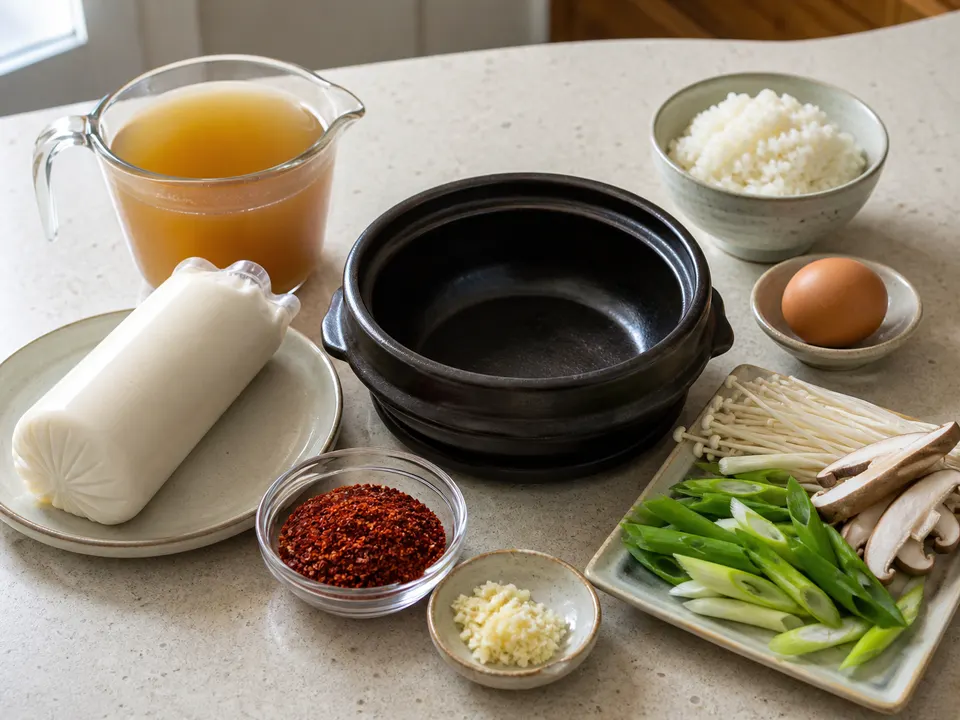
For two bowls, start with one 12- to 14-ounce tube of plain soft tofu, two cups of broth, one small onion, two garlic cloves, two scallions, and four ounces of mushrooms. Add Korean chili flakes, soy sauce, sesame oil, and two eggs. Cooked rice belongs on the side. If you want seafood, use a small handful of clams or shrimp; if you want a meat-free bowl, let mushrooms and broth carry the savory direction. Do not buy every possible topping on the first run.
Korean chili flakes, or gochugaru, are not the same thing as a generic hot pepper powder. The flakes give the broth color, warmth, and a slightly fruity pepper aroma. Start with one teaspoon per two bowls. You can add more while the broth is still plain, but you cannot pull heat back out once the tofu and egg are in place.
Perilla seed powder is an optional detour rather than a required pantry item. VISITKOREA uses it with soft bean curd, broth, and a small amount of sweet-rice powder for a rich, mild variation. If you find perilla seed powder at a Korean grocery, use it as the second-bowl experiment: keep the base the same and add it to one portion so you can taste what the nutty finish changes.
SEE THE BOWL
From pantry setup to finished pot
Swipe through the ingredients and the finished bowl. The images are original editorial illustrations, made to show texture and sequence rather than document one restaurant or recipe test.
Shop by role: tofu for texture, broth for direction, chili for warmth, and one topping for contrast. AI-generated editorial illustration; not documentary evidence. visual only; not evidence of a specific recipe result, restaurant, product, or regional standard 
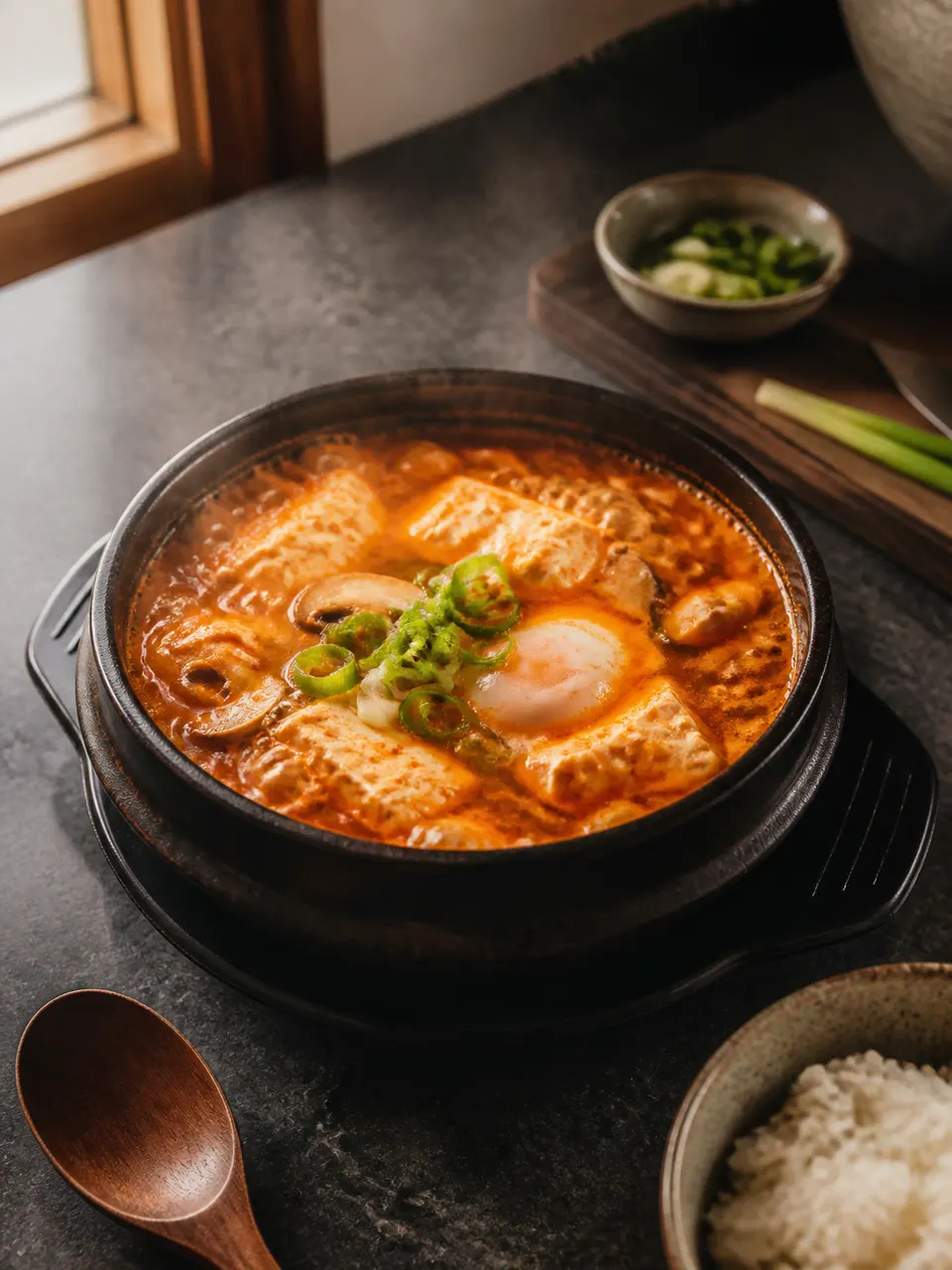
The finished bowl: keep the tofu soft, taste the broth before the egg goes in, and serve with rice. AI-generated editorial illustration; not documentary evidence. visual only; not evidence of a specific restaurant, packaged product, recipe result, or regional standard
1 / 2
These original visuals explain the article's pantry-to-pot idea; they do not depict a specific restaurant, meal, or tested recipe result.
Source: Korea.net · Sundubu Jjigae, Korean Spicy Soft Tofu Stew · VISITKOREA · Perilla Seed and Soft Bean Curd Jjigae
Make the broth before you add the tofu
Warm one teaspoon of sesame oil in a small pot over medium heat. Add the onion, garlic, and mushrooms and cook until the onion softens. Stir in the chili flakes for just a few seconds, then pour in the broth. Let it simmer for five minutes so the aromatics have time to move into the liquid. Add one teaspoon of soy sauce, taste, and decide whether the broth needs more salt or more chili.
This order is a practical adaptation of the Korean sources, not a claim that every household uses the same pan or timing. The official descriptions consistently put the broth, aromatics, soft tofu, and finishing ingredients into a short simmering sequence. The original value here is the stopping point: taste the broth while it is still easy to change.
If you are using clams or shrimp, add them before the tofu and cook until they are done. If you are using a ready-made broth, check its salt level before adding soy sauce. If your broth is mild, that is useful information rather than a failure. Sundubu is easier to fix when the liquid is under-seasoned than when the whole bowl is already too salty.
BROTH TO BOWL
The five-move sundubu sequence
The order matters because the tofu is the ingredient you cannot easily repair once it breaks apart.
- 01
01 · SWEAT 볶기
Soften onion, garlic, and mushrooms in sesame oil.
- 02
02 · BLOOM 고춧가루 넣기
Warm the chili flakes briefly before the broth goes in.
- 03
03 · TASTE 간 보기
Adjust salt and heat while the liquid is still plain.
- 04
04 · SLIDE 순두부 넣기
Add soft tofu in large spoonfuls and lower the heat.
- 05
05 · FINISH 마무리
Add the egg and scallions near the end.
Source: Korea.net · Sundubu Jjigae, Korean Spicy Soft Tofu Stew · VISITKOREA · Perilla Seed and Soft Bean Curd Jjigae
Protect the soft tofu
Cut the tofu tube open and slide the contents into the simmering broth in large spoonfuls. Let the pieces settle for two or three minutes before you stir. Use the back of a spoon to divide any piece that is too large, but do not whisk the pot. The best texture is not a perfectly smooth puree; it is a collection of tender curds that still hold enough shape to meet the broth on the spoon.
This is the bowl's quiet technique. The chili and steam make the dish look dramatic, but the tofu decides whether the meal feels silky or watery. A hard boil can break the curds apart, especially when you keep moving them. Lower the heat to a steady simmer once the tofu is in, and let the pot do the work.
Add the egg near the end. Crack it directly into the bubbling broth and leave it alone for a minute if you want a soft center, or stir gently if you prefer the egg spread through the soup. Scallions go in last. The bowl should still be hot when you serve it, but it does not need another long boil after the egg is added.
TEXTURE CHECK
What gentle heat changes
The same tofu can feel silky or broken apart depending on how much movement and heat the pot gets.
- 01
LOW · SETTLE 가라앉히기
Let large spoonfuls of tofu settle into a steady simmer.
- 02
MEDIUM · FOLD 살살 섞기
Use the back of a spoon to divide only oversized pieces.
- 03
HIGH · BREAK 세게 젓지 않기
Avoid a hard boil and vigorous stirring once the tofu is in.
Source: Korea.net · Sundubu Jjigae, Korean Spicy Soft Tofu Stew · VISITKOREA · Perilla Seed and Soft Bean Curd Jjigae
Serve it with rice, then adjust one variable
Sundubu jjigae is usually served with rice because the broth is meant to be part of a larger bite. Spoon a little rice into the stew or eat the two side by side. The first taste should answer three simple questions: Is the broth salty enough? Is the heat pleasant or distracting? Does the tofu still feel soft and distinct? Do not solve all three with more chili. Salt, heat, aroma, and texture are different problems.
For a second bowl, change one variable. Keep the broth and tofu the same, then try a little more gochugaru, a spoonful of perilla seed powder, a different mushroom, or a later egg. That small comparison will teach you more than buying a completely different kit and changing the base, topping, and sauce at once.
A restaurant bowl in Korea may arrive in a stone pot, with clams, pork, kimchi, or a raw egg depending on the kitchen. A home bowl may use mushrooms and a carton of broth. The shared idea is the layering: soft tofu gives the bowl its body, the broth gives it direction, and the final toppings tell you where to take it.
The menu words worth knowing
순두부 (sundubu) means soft tofu. 순두부찌개 (sundubu jjigae) is the stew. 들깨순두부 (deulkkae sundubu) points to a soft-tofu dish built with perilla seed, often with a milder and nuttier profile. 해물순두부 (haemul sundubu) signals seafood. If you see 굴, that is oyster; 바지락 means clam; 돼지고기 means pork. These words help you ask a useful ingredient question before the pot arrives.
Do not read the red color as a complete description. Korea.net notes that sundubu can be made with a range of ingredients and that the broth may include chili, seafood, pork, kimchi, mushrooms, garlic, and green onion. A pale broth is not automatically bland, and a bright red broth is not automatically the best version. Ask what the restaurant uses when an ingredient matters to you.
If you are shopping, look for a plain soft-tofu tube rather than a firm block. If you are ordering, look for the topping word that matches what you want to taste. If you are cooking, make the broth adjustable before the tofu goes in. Those three decisions are enough to make the dish feel legible.
Your next bowl can go in one direction
Make the first bowl simple: mushroom broth, soft tofu, egg, scallions, and rice. Once you know how the tofu behaves, choose a direction for the next one. Add clams for a sea-salty bowl, pork for a fuller broth, kimchi for a sharper one, or perilla seed powder for a rounder, nuttier finish. Keep the base method steady so the new ingredient has a chance to speak.
That is the reason sundubu is such a good pantry starter. It looks like a single red dish, but the pot is really a set of decisions that you can see and taste in order. Start with the tofu. Taste the broth. Add the heat. Protect the curds. Finish with the egg. Once those moves make sense, the restaurant menu and the grocery aisle become much less mysterious.