PLACE GUIDE · park
Seoul Forest
How can you turn a large Seoul park into a first visit that feels manageable?
Seongsu · Seoul
- Address
- 273 Ttukseom-ro, Seongdong-gu, SeoulSource: Visit Seoul · Seoul Forest · VISITKOREA · Seoul Forest
- Hours
- The park is open 24 hours; Eco Forest and other facilities have separate hours and closures.Source: Seoul Metropolitan Government · Seoul Forest · Seoul Forest Conservancy · Park Information · Visit Seoul · Seoul Forest
- Getting there
- Seoul Forest Station exits 3 and 4 are the shortest subway approach; Ttukseom Station Exit 8 is another route.Source: Visit Seoul · Seoul Forest · VISITKOREA · Five Ways to Enjoy Seoul Forest
- Admission
- Park entry is free, while programs or facilities can have separate conditions.Source: VISITKOREA · Seoul Forest · VISITKOREA · Five Ways to Enjoy Seoul Forest
- CHANGE RISK
- high
- VERIFICATION
- Recheck facility hours, closures, programs, and event-day access before publishing or visiting.
GOOD WAYS IN
- first visit
- quiet morning
- wetland loop
- bike and lawn
The open park and its individual gardens do not share one operating schedule. Last checked 2026-08-12. Source: Seoul Metropolitan Government · Seoul Forest · Seoul Forest Conservancy · Park Information · Visit Seoul · Seoul Forest · VISITKOREA · Seoul Forest · VISITKOREA · Five Ways to Enjoy Seoul Forest
GOOGLE MAPS
Open Seoul Forest in Google Maps
Seoul Forest, 273 Ttukseom-ro, Seongdong-gu, Seoul
Check the live pin and directions before you leave.
OPEN IN GOOGLE MAPS ↗Start with the park, not a checklist
A first visit to Seoul Forest can go wrong in a very pleasant way: you keep finding another path, another lawn, another pond, and another reason not to turn around. The park is generous with options, but that does not mean you need to collect them. The better question is what kind of afternoon you want to have.
If you want a calm introduction, treat Seoul Forest as a short walk with one optional detour. Begin with the open park landscape, notice how the city sits around it, and then decide whether your energy is pointing toward water, trees, a garden, or a longer loop. This keeps the visit flexible without making it vague.
The official descriptions frame Seoul Forest as a group of connected spaces rather than one single attraction. That matters for planning: your route can be quiet and slow even when the surrounding district is busy. Choose a starting rhythm first, then let one feature earn the next part of the visit.
Arrive from the side that matches your day
The listed address is 273 Ttukseom-ro, Seongdong-gu, Seoul. Seoul Forest Station is the cleanest default for a first visit, and Visit Seoul points travelers toward Exits 3 and 4. Ttukseom Station Exit 8 is another approach when your plans already place you closer to the surrounding neighborhood. Pick the entrance that reduces the amount of backtracking you will do later.
Seoul Forest is open 24 hours, which makes it unusually forgiving for an urban park. That broad access should not be mistaken for every facility being open around the clock. The Eco Forest, visitor services, gardens, programs, and event areas can have their own hours, closures, or operating conditions. The park is open; your chosen feature may not be.
For a simple first route, enter, orient yourself with the main map or information point, and walk toward the open lawn before you commit to a branch. That first stretch gives you a feel for distance and crowd level. If you are meeting someone, it is also easier to regroup in an open area than beside a small trail or facility entrance.
SEE THE PARK
Three ways to picture your first loop
These original editorial illustrations separate the park's main visual moods: arrival path, wetland pause, and longer route.
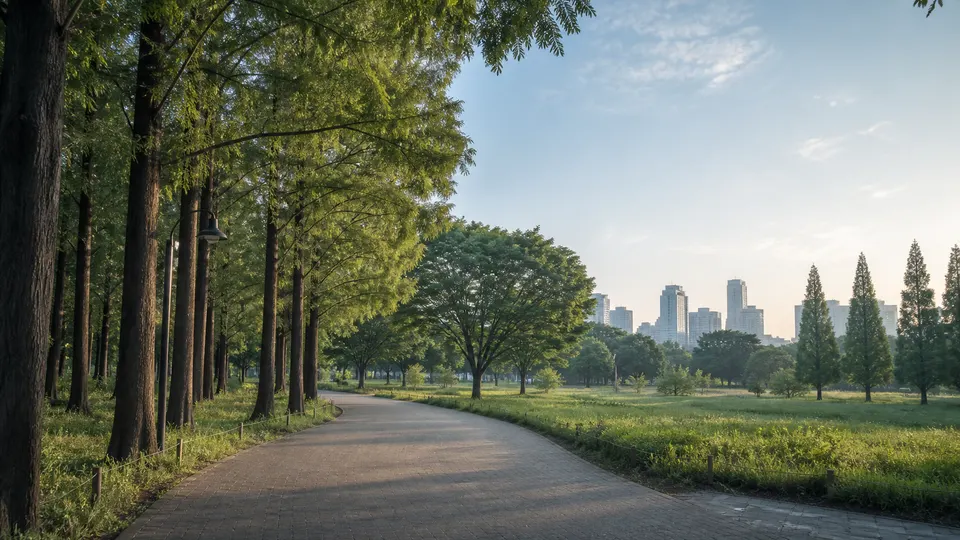
Use the open path and lawn as your first orientation loop. AI-generated editorial illustration; not documentary evidence. visual only; does not depict a specific visit, current condition, facility, or documented event 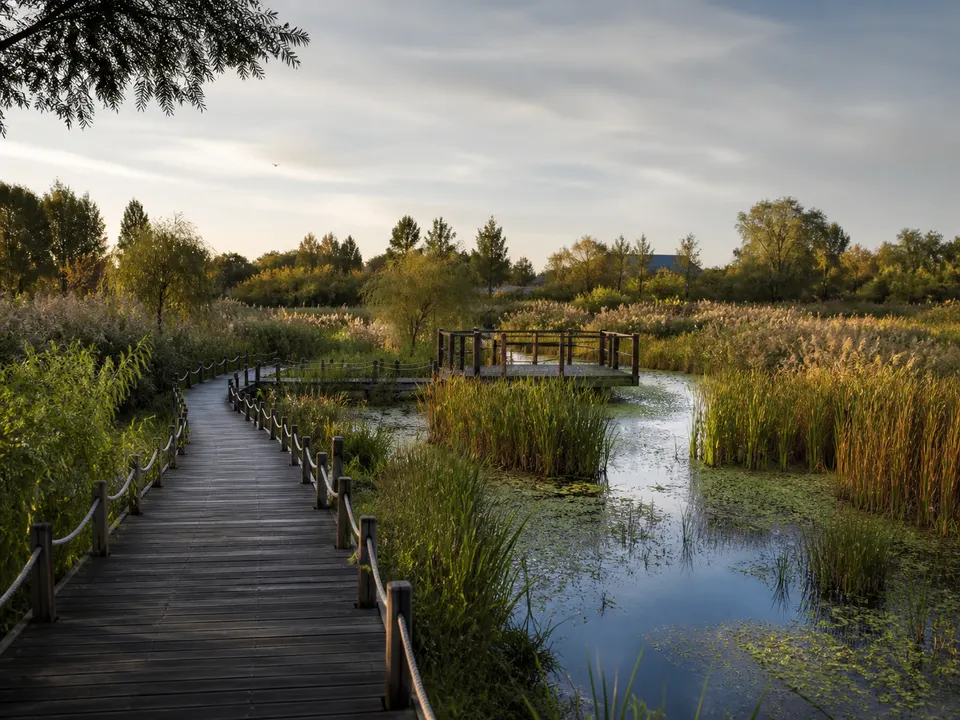
Choose the wetland branch when you want a slower observation walk. AI-generated editorial illustration; not documentary evidence. visual only; does not depict a specific visit, current condition, facility, or documented event 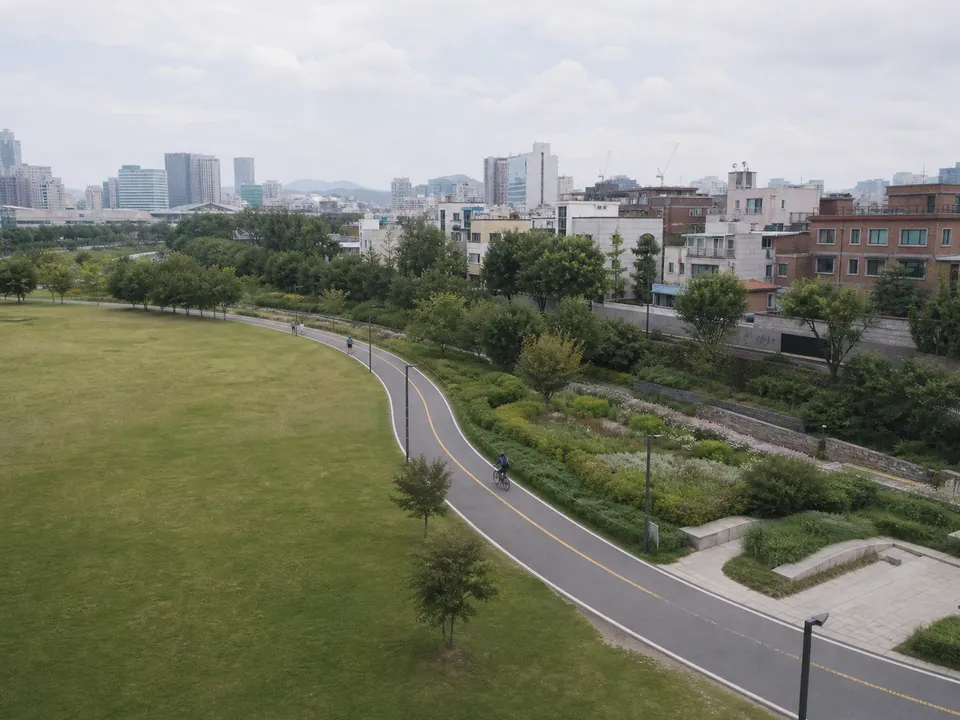
Keep a wider bike-and-lawn loop optional for a longer day. AI-generated editorial illustration; not documentary evidence. visual only; does not depict a specific visit, current condition, facility, or documented event
1 / 3
Original AI-generated editorial illustrations. They explain route ideas and do not document current conditions or a specific visit.
Source: Seoul Metropolitan Government · Seoul Forest · Visit Seoul · Seoul Forest · VISITKOREA · Five Ways to Enjoy Seoul Forest
Choose one loop and one optional branch
The quiet-morning version starts with the broad park paths and a slow look at the trees, lawn, and skyline. It works when you want the feeling of a city park without a strict attraction list. Bring water, allow your pace to change, and use the first open section as your reset point before choosing anything more specific.
The wetland version is better when you want the park to become an observation walk. Boardwalks and water-facing spaces change the pace because they invite you to stop rather than simply move through. Choose this branch when you want reeds, reflections, and small habitat details to carry the visit. Do not turn it into a wildlife promise: conditions vary, and the value is the pause itself.
The bike-and-lawn version suits a longer outing or a group with different energy levels. A route that passes through open space can let one person walk slowly while another takes a wider loop. The practical point is to keep the loop optional. A first visit should end with a place you would like to revisit, not with the feeling that you missed a test.
A short English-subtitled VisitSeoul video adds useful visual context for the Seongsu and Seoul Forest setting. Watch it as orientation, not as a promise that the park will look identical on your day: weather, season, maintenance, and events can change the view.
 WATCH ON YOUTUBECinematic Seoul: Seongsu-dong and Seoul Forest
Open embedded player
Source: YouTube · VisitSeoul TV · Cinematic Seoul: Seongsu-dong and Seoul Forest
Let the season choose the detour
Seoul Forest changes most noticeably through the relationship between shade, open lawn, and water. In warm weather, the tree-lined paths can make a short walk feel more comfortable than an exposed street route. In colder months, the open areas give you a clearer sense of the park's scale and the way the city frames it. Neither is the correct season; each asks for a different pace.
The 2026 Seoul International Garden Show is another reason to check the current program before you arrive. Seoul's announcement describes a long-running show that links Seoul Forest and Seongsu, so an event-day visit may add installations, crowds, or route changes to the usual park rhythm. Treat the show as a possible layer over the park, not as a replacement for the park itself.
When the forecast is uncertain, choose a route with an easy exit and keep the wetland or garden branch optional. A park day can still work if you only complete the opening walk. The useful measure is whether the route fits the weather and your attention, not whether you reached every named area.
Read the park as connected rooms
Seoul Forest feels easier when you think of it as connected rooms with different moods. The open lawn is the arrival room: broad, legible, and good for deciding what comes next. Tree-lined paths are the transition room, where the city softens and the walk becomes the main activity. Wetland and garden areas are destination rooms that reward a slower stop.
This mental map also helps with groups. Someone who wants photographs can take the garden branch, while someone who prefers a quiet bench can stay closer to the open paths. You do not need to force everyone into the same speed. Agree on a return point and let the middle of the visit split naturally.
Keep the practical caveat visible throughout the day. The park's general access, the hours of Eco Forest, and the schedules for programs or facilities are not the same piece of information. Check the current official notice when a particular space is the reason you came. If no single facility is essential, the open park loop gives you the safest flexible plan.
Leave with a reason to come back
A successful first visit to Seoul Forest is not a complete survey. It is a route that gives you one clear impression: the park's relationship with the city, its wetland pause, its open lawn, or its slower garden spaces. Once you know which part held your attention, a second visit can be more specific.
The decision is simple. Start from Seoul Forest Station when you want the most direct first approach. Walk the open park section before choosing a wetland, garden, or bike-and-lawn branch. Keep the branch optional, and check live hours or event notices if a facility matters to your plan.
That is the advantage of a large urban park: you can make the day as detailed or as light as you need. Seoul Forest does not require a perfect itinerary. It rewards a small plan, a little room to wander, and enough restraint to save one path for next time.