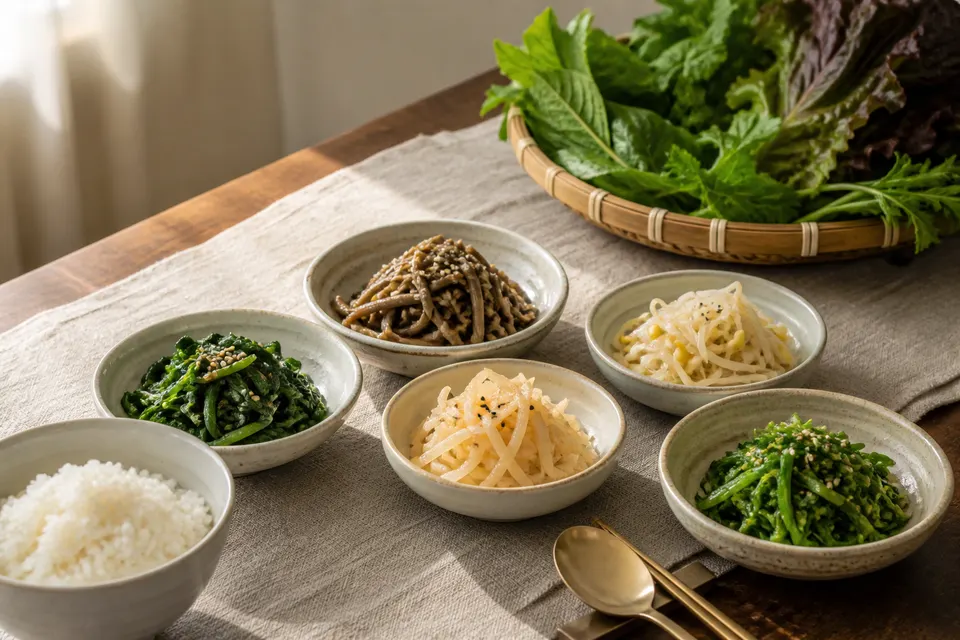
The short answer: namul is a way of preparing vegetables
Namul is the Korean name for a broad family of seasoned vegetable side dishes. The Korean Studies Encyclopedia defines it as plants gathered from mountains or fields, or vegetables, that are seasoned into a side dish. In ordinary English, “seasoned greens” gets close, but it is still narrower than the Korean word.
The ingredient can be a leafy green, a root, a mushroom, a shoot, or a cultivated vegetable. The dish may be served raw after seasoning, or cooked first. In everyday use, namul often refers to cooked preparations, which is why the same word can lead to very different textures on a Korean table.
Two cooking methods explain much of the texture
The first method is to blanch a vegetable, drain it, and season it. This keeps the ingredient recognizable: leafy greens stay leafy, stems stay crisp or springy, and the seasoning sits close to the surface. The second is to stir-fry the ingredient in oil before seasoning it. That approach works especially well for firmer vegetables, roots, mushrooms, and ingredients that benefit from a deeper, warmer flavor.
These are broad families rather than rigid rules. The Korean Studies Encyclopedia also records dried vegetables that are soaked and prepared later, while the Republic of Korea’s cultural information service describes blanching, stir-frying, and braising among the methods used for seasonal vegetables in temple cuisine. The useful lesson is simple: ask what happened to the ingredient before you guess the texture.
HOW TO READ NAMUL
The method changes the bite
The same broad family can hold very different vegetables because the cooking method changes how the ingredient feels and tastes.
- 01
Blanch 데치다
Briefly cook a tender vegetable, then drain it before seasoning.
- 02
Season 무치다
Toss the ingredient with a measured seasoning so its character remains clear.
- 03
Stir-fry 볶다
Cook a firmer vegetable in oil before adding seasoning.
- 04
Rehydrate 불리다
Soak a dried vegetable before preparing it for the table.
Based on: 한국민족문화대백과사전 · 나물 (Namul) · Korea.net · Representative Temple Dishes and Cooking Methods
Why namul can taste like a season
Namul has a close relationship with the Korean seasonal calendar. The encyclopedia notes that fresh seasonal plants are not the whole story: vegetables can also be dried and stored, then rehydrated during winter or the early spring before new shoots appear. That makes namul both fresh and preserved, depending on the ingredient and time of year.
Spring makes the pattern easiest to see. Korea.net’s official food and culture coverage describes minari, or water parsley, naengi, or shepherd’s purse, and bomdong, or spring cabbage, as seasonal examples. Their flavors are different: minari is aromatic, naengi is fragrant and slightly bitter, and bomdong is fresh and crisp. They are not interchangeable “greens”; the ingredient carries the season into the bowl.
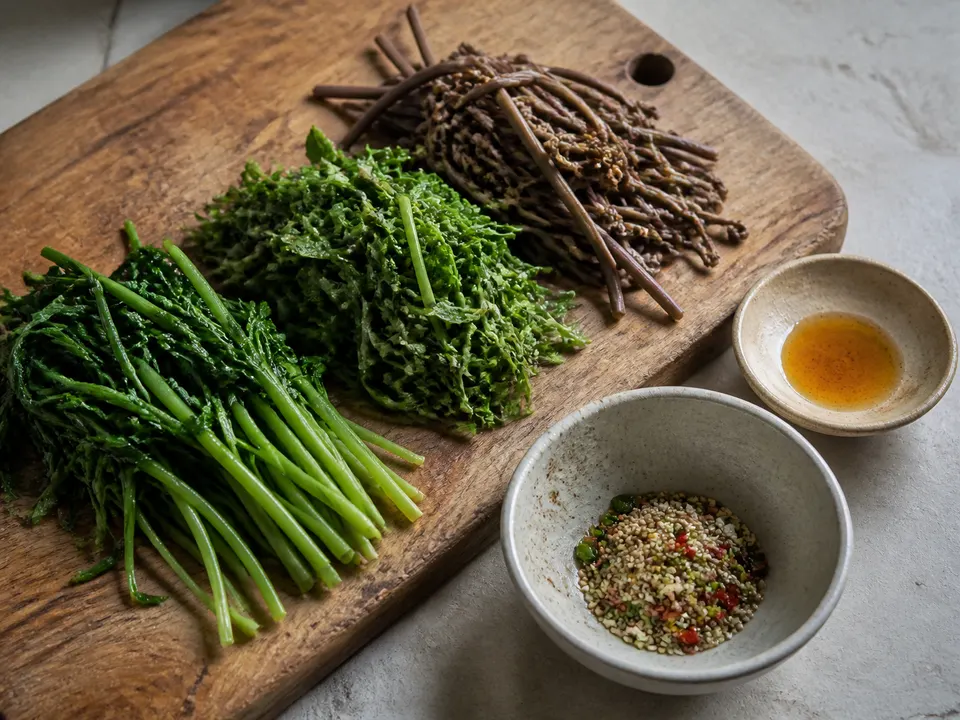
Based on: 한국민족문화대백과사전 · 나물 (Namul) · Korea.net · Energy-boosting seasonal vegetables signal spring's arrival
A side dish, but not a minor idea
The encyclopedia calls namul one of the most basic and common foods among everyday Korean side dishes. That description matters because “side dish” can sound like a small garnish in English. Namul is better understood as part of the meal’s vegetable structure: several small preparations can sit alongside rice, soup, or a main dish, each carrying a different texture and seasoning.
This is also why namul rewards attention. A table may offer a cool, lightly seasoned green beside a warm stir-fried root and a darker preserved vegetable. The dishes are small, but the arrangement lets the meal move between fresh, earthy, bitter, sweet, and savory notes without asking one ingredient to do everything.
The easiest way to start
If you are shopping or ordering Korean food for the first time, start with three questions: What is the vegetable? Was it blanched, stir-fried, or braised? Is it fresh or rehydrated? Those questions will tell you more than translating namul as “herb” or “salad.”
The short version is that namul is a preparation family built around the character of the ingredient. Learn the vegetable name, notice the cooking method, and you will have a much clearer idea of what is about to arrive at the table.