RESTAURANT GUIDE
Sanullim 1992 (산울림1992)
Go here when you want Korean traditional liquor to shape the meal rather than arrive as an afterthought. The useful unit is not one famous plate; it is the way a drink, anju, and shared table change one another.
- Address
- 60 Seogang-ro 9-gil, Mapo-gu, Seoul
- Hours
- Published listings differ; verify the current schedule before leaving.
- Order shape
- One set or one shared plate first, then add only after the drink and food have found their rhythm.
- Last checked
- August 11, 2026
This is a sourced restaurant profile, not a paid ranking or a claim that every dish will suit every palate. Based on: VISITKOREA · Sanullim 1992 · Sanullim 1992 · Official Instagram · NOL World · Sanullim 1992 · DiningCode · Sanullim 1992
What kind of place is Sanullim 1992?
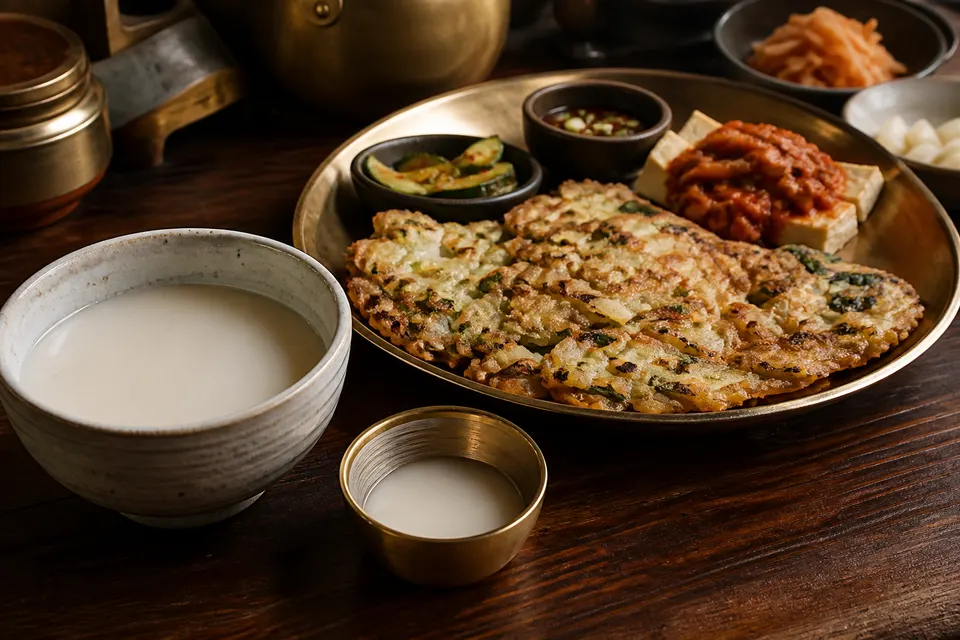
Sanullim 1992 is a Korean bar and restaurant in Seoul's Mapo district. VISITKOREA describes it as a place with nearly 200 kinds of traditional Korean liquor, including makgeolli, refined rice wine, and distilled spirits, alongside dishes such as tofu with stir-fried kimchi, ox-knee soup, and cabbage wraps with soy-braised pork. That combination tells you how to read the room: this is a place for pairing and conversation, not a quick bowl eaten in isolation.
The restaurant's identity is useful because traditional liquor in Korea is not one flavor category. Makgeolli can be creamy, tart, floral, grainy, or gently sweet. Refined rice wines can feel cleaner and lighter. Distilled spirits can bring more heat or aroma. The menu gives you a reason to ask for a match rather than choosing a bottle by a familiar label alone.
The recommendation here is narrow. Sanullim 1992 is worth considering when you want the relationship between Korean drinking culture and food explained through a real table. It is not a universal answer to where to eat in Seoul, and a listing that calls a place popular does not tell you whether today's dish will be your favorite.
Start with the format, not the longest drink list
A large selection can make the first order harder, not easier. Begin by deciding whether the meal is mainly about trying a traditional liquor, sharing a substantial plate, or understanding the restaurant's signature format. The answer determines what information you need from the staff.
If the format is the priority, Bansang is the cleanest entry point. VISITKOREA lists Bansang No. 1 through No. 5 as the signature menu, with each number offering a different composition. That gives a group a sequence to discuss: choose a set, learn what arrived, then decide whether a second plate adds contrast or simply repeats the first flavor.
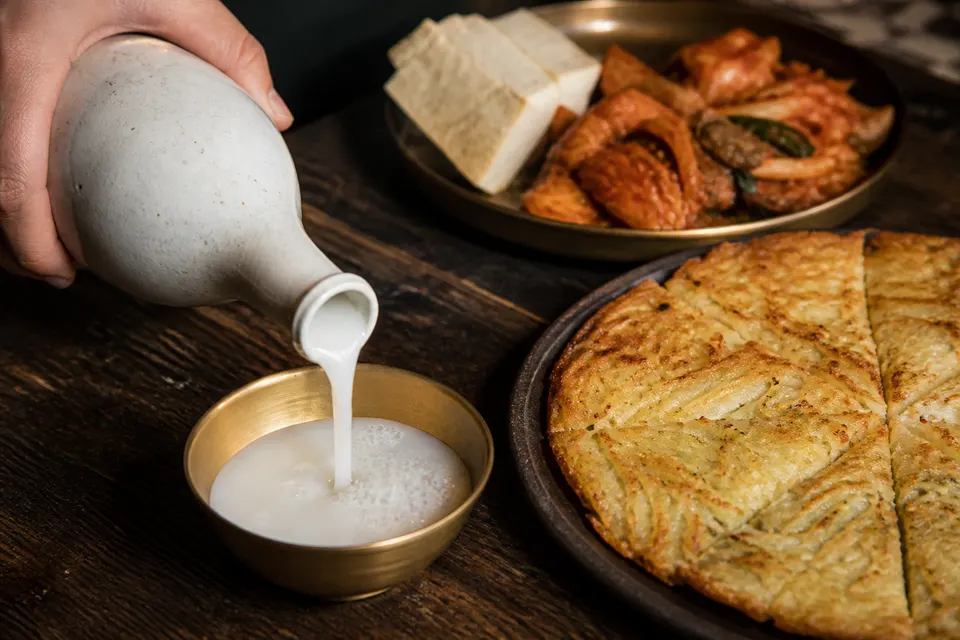
If you want less commitment, the cheese-and-potato pancake is a more focused start. A pancake makes texture visible: browned edges, a soft center, and the need to cut and share it while it is still warm. It also gives the first drink something salty and crisp to meet. This is a practical ordering suggestion, not a claim that the dish is objectively best.
Build the first pairing in four small moves
First, tell the server what you want the drink to do. If you prefer something softly tart and milky, say so before ordering a bottle. If you prefer a cleaner or more aromatic drink, describe that instead. The point is to give the staff a useful preference rather than asking for the single most popular item.
Second, order one food anchor. The cheese-and-potato pancake is a readable starting point because the crisp edge and savory center give you a clear reference. If the table wants a fuller meal, choose a Bansang set and allow its changing composition to set the pace.
Third, taste the drink on its own and then with the first bite. Notice whether the food makes the drink seem sweeter, sharper, heavier, or quieter. Korean anju is not only a list of snacks beside alcohol; the pairing changes how both parts of the table are perceived.
Fourth, add a second dish only when it introduces a new texture or temperature. Tofu with stir-fried kimchi can bring softness and acidity; a soup can slow the meal and make it more substantial. Ordering everything at once creates a crowded table and makes it harder to understand what the restaurant is doing.
BUILD THE TABLE
A first order with an arc
Start with one clear pairing, then let the table become more specific instead of ordering every category at once.
- 01
CHOOSE 취향 말하기
Describe whether you want a tart, creamy, clean, or aromatic drink.
- 02
ANCHOR 안주 고르기
Start with Bansang or one crisp shared plate.
- 03
TASTE 함께 맛보기
Try the drink alone, then with the first bite.
- 04
ADD 한 접시 더
Choose a second dish only when it adds contrast.
Based on: VISITKOREA · Sanullim 1992 · Sanullim 1992 · Official Instagram · NOL World · Sanullim 1992
Read the menu as a set of choices
The word anju means food served with alcohol, but it does not describe one fixed recipe. At this restaurant, the menu combines familiar Korean drinking-table ideas with house dishes and set formats. Read the menu for the role each plate will play: crisp, rich, brothy, fresh, spicy, or filling.
The list of traditional liquor also changes the order of operations. You do not need to understand every producer or region before you sit down. Choose one flavor direction, ask for a recommendation within it, and keep the first plate simple enough that you can notice the pairing. A short explanation from the staff is more useful than a long search result when the live menu has changed.
Names can also carry a cultural clue. Bansang means a table setting or meal table, so the set format signals a spread rather than a single bowl. That does not make the meal formal in every detail, but it tells you to expect several components and a shared rhythm.
Based on: VISITKOREA · Sanullim 1992 · DiningCode · Sanullim 1992
What to verify before you go
The address is listed as 60 Seogang-ro 9-gil, Mapo-gu, Seoul. The official restaurant Instagram is the most useful live channel for current menu or service announcements, while tourism and reservation listings provide a second check on location and operating information.
Hours deserve special attention because published listings do not agree. VISITKOREA lists one weekly schedule, while NOL World currently shows another shorter schedule. That conflict is not a minor formatting issue: it is exactly the kind of detail that can turn a good restaurant recommendation into a wasted trip. Check the official channel and the latest listing on the day you plan to go.
Do the same for menu availability. Bansang numbers, pancake pricing, drink stock, and seating conditions can change. This article deliberately leaves out live prices and queue claims so the useful part remains stable: how to choose the table once the current menu is in front of you.
What this recommendation does—and does not—mean
A restaurant profile should help you decide whether a place fits the meal you want. It should not turn one visit into a ranking of all Korean food or treat a tourism listing as a guarantee of personal taste. Sanullim 1992 is a strong match for a shared evening built around traditional liquor, composed dishes, and a willingness to ask questions.
The secondary review material is useful for discovering recurring menu language and visit details, but it is still secondary. A review page can tell you what people tend to mention; it cannot prove that today's kitchen, staff, seating, or dish will be identical. That is why the article separates sourced facts from the ordering framework.
The short decision is simple: choose Sanullim 1992 when you want Korean drinking culture to be part of the meal's subject. Start with Bansang or the cheese-and-potato pancake, ask for a drink direction instead of a random bottle, add one contrasting dish, and verify the live details before you set out.