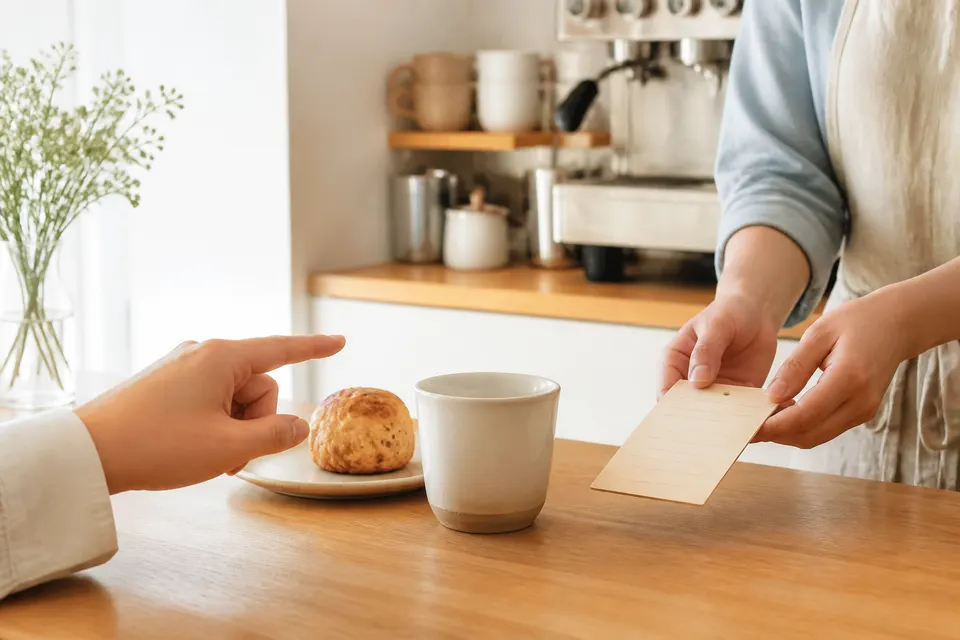
At the counter, start with the thing
Imagine you are ordering a drink and the person behind the counter is waiting for the last part of your sentence. You can say 커피 주세요 (keopi juseyo), which is roughly Coffee, please. The expression is short because the setting supplies much of the meaning: you are asking the staff member to give you the item you just named.
The key is not to translate 주세요 as one permanent English word. In this noun pattern, it works like a polite request for the thing in front of it. Water, a ticket, one coffee, a bag, and a menu can all fit the same frame. The noun carries the object; 주세요 carries the request.
Separate a thing from an action
A noun plus 주세요 asks for an item: 물 주세요 (mul juseyo), water please. A verb stem plus 주세요 asks someone to do something: 도와주세요 (dowa juseyo), please help me. This is the contrast that turns a phrase into a tool. You are not just adding please to a noun; you are choosing whether the request is about receiving a thing or getting an action.
You will also hear 주세요 in longer expressions where the requested action is clearer from context. 사진 찍어 주세요 means Please take a picture. 천천히 말해 주세요 means Please speak slowly. The request remains polite, but the detail before 주세요 tells the listener what to do.
 WATCH ON YOUTUBEKorean Request Sentences and Polite Expressions
Open embedded player
Source: YouTube · Korean Request Sentences and Polite Expressions
Add one useful detail at a time
Once the basic frame feels comfortable, add one detail before 주세요. 한 잔 주세요 means Please give me one cup or one glass. 큰 사이즈 주세요 means Large size, please. 포장해 주세요 means Please pack it to go. You do not need a long sentence to sound clear; you need the right piece of information before the request ending.
A simple sequence works well: name the item, add the detail that changes the order, then finish with 주세요. If the listener needs another choice, they can ask a follow-up. This is better than stacking every possible detail into one memorized line. A short request leaves room for the exchange to continue naturally.
Polite does not mean context-free
주세요 is a safe beginner choice in many public situations because it sounds polite and direct. That does not make it a magic politeness button. A sharp voice, a crowded counter, or a request that ignores what the other person just said can still feel abrupt. Korean politeness lives in the whole exchange: greeting, timing, volume, and what you do after the request.
You can keep the interaction warm with 감사합니다 after you receive the item. If you need to get a staff member's attention, a brief 실례합니다 (sillyehamnida, excuse me) can come before the request. These expressions do different jobs. 주세요 asks for the thing or action; 감사합니다 acknowledges help; 실례합니다 opens an interruption politely.
Practice with three swaps
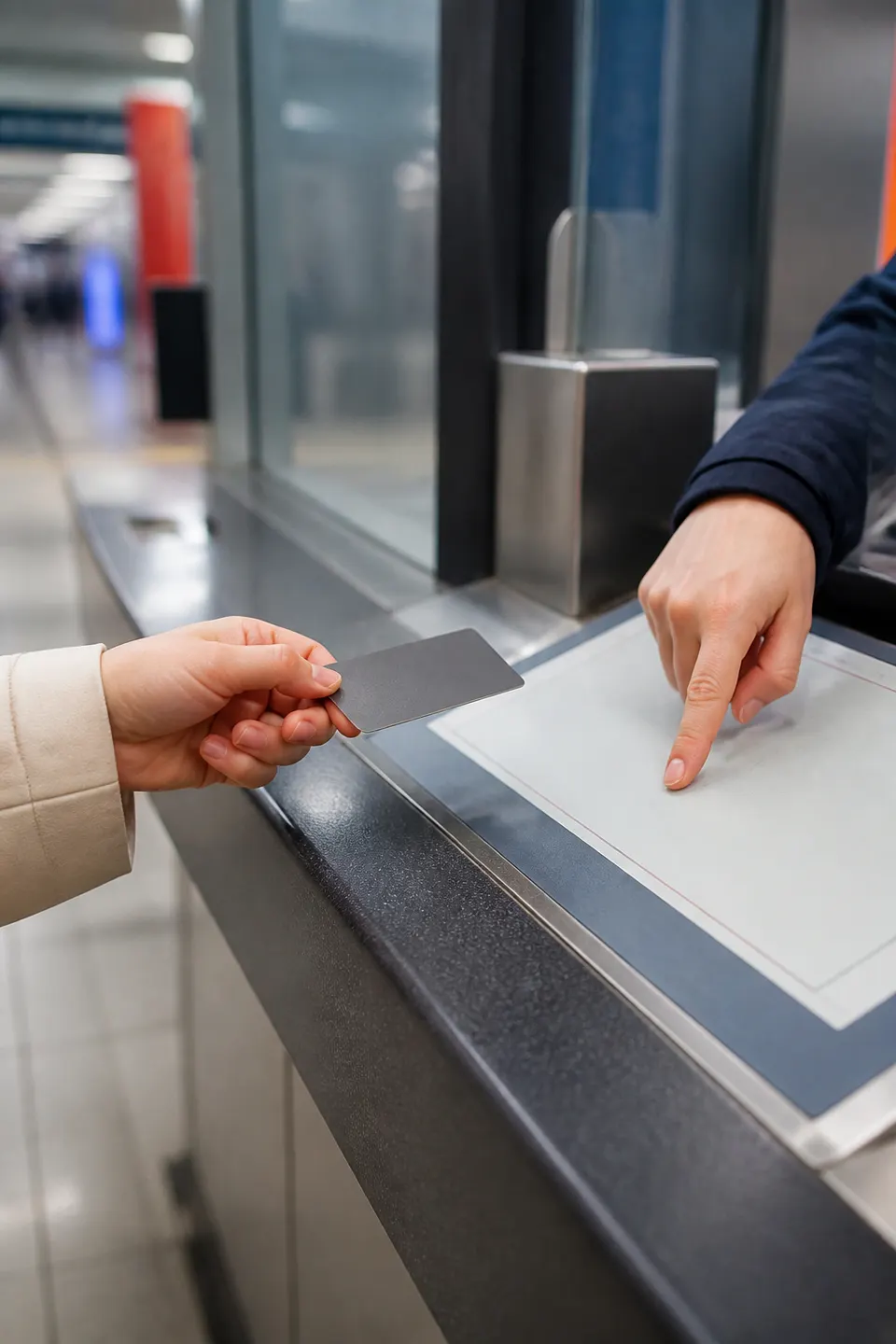
Do not practice 주세요 as a list of isolated translations. Pick one setting and swap the object. At a cafe: 아메리카노 주세요, an Americano please. At a shop: 봉투 주세요, a bag please. At a station: 표 주세요, a ticket please. The grammar stays steady while your vocabulary changes.
Then switch from an item to an action: 사진 찍어 주세요, please take a picture. 다시 말해 주세요, please say it again. 천천히 말해 주세요, please speak slowly. When you can make that switch, 주세요 stops being a phrase you recite and becomes a small sentence frame you can carry into a new situation.
Source: National Institute of Korean Language · Korean-English Learners' Dictionary · Korea.net · While in Korea: Table Manners