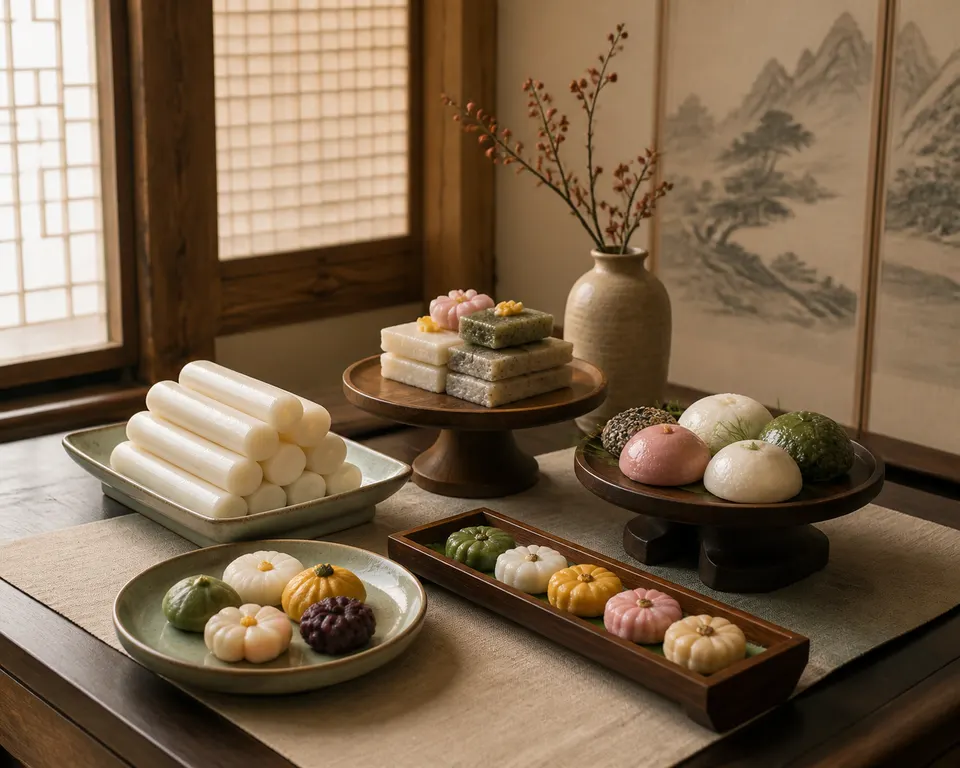
Translate the category before you translate the object
If someone says tteok, the safest first move is not to picture one pastel dessert. Picture a category. English-language readers often meet 떡 as rice cake, which is a useful bridge, but the bridge is not the whole map. It tells you that rice matters and that the result is cake-like in a broad sense. It does not tell you the shape, texture, preparation, use, or occasion of the piece in front of you.
The stored Korean encyclopedia record for 떡 and the separate record for 떡박물관 give this topic two useful scales. One points to tteok as a broad subject; the other places rice-cake culture in a museum and cultural-interpretation frame. That is why the best beginner question is plural in spirit: what kind of tteok is this, and what context makes that form recognizable? You are learning a category and a reading habit at the same time.
Let the form do some of the explaining
Names are not decorative labels. They help narrow the object. The registry includes a dedicated entry for garaetteok, which gives the reader a concrete example of how a named form sits inside the wider tteok category. You do not need to memorize every variety before you can use the distinction. Start with the difference between the umbrella word and the specific name attached to a particular shape or preparation.
This also protects you from a common translation error: treating one visible form as the definition of the whole food. A long, plain rice cake can be an important reference point, but it should not become a stand-in for every tteok. When you encounter a new one, note its name, surface, density, filling if one is described, and the way it is being served. Those details are not a complete taxonomy, but they are better evidence than color alone.
READ THE CATEGORY
Three visual clues, no single universal cake
These original editorial illustrations separate the broad tteok category, named-form comparison, and the craft setting that keeps food connected to culture.
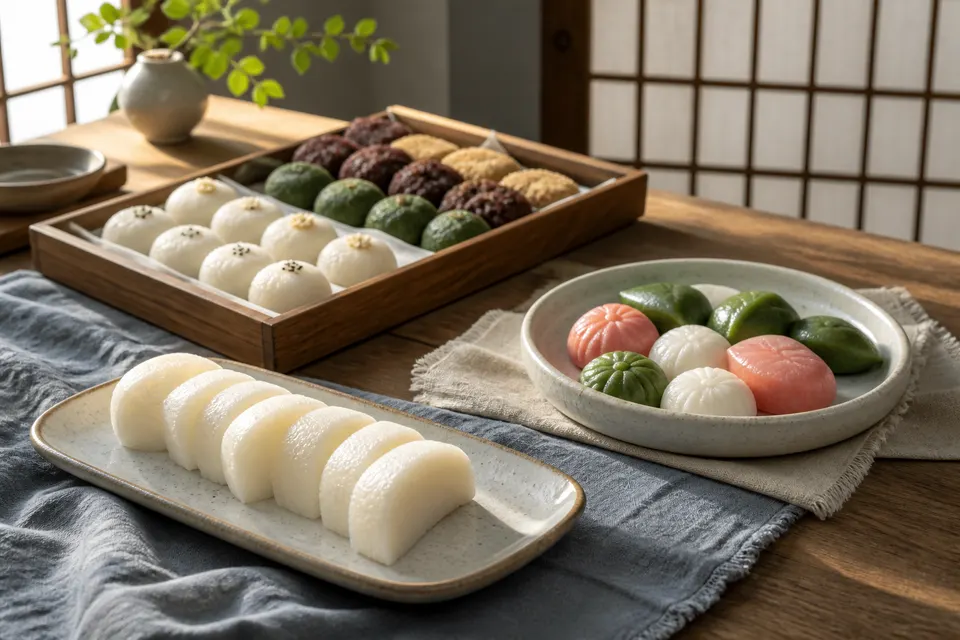
A category becomes easier to read when distinct forms stay distinct instead of becoming one generic dessert. AI-generated editorial illustration; not documentary evidence. visual only; does not depict a specific household, menu, season, or universal tteok taxonomy 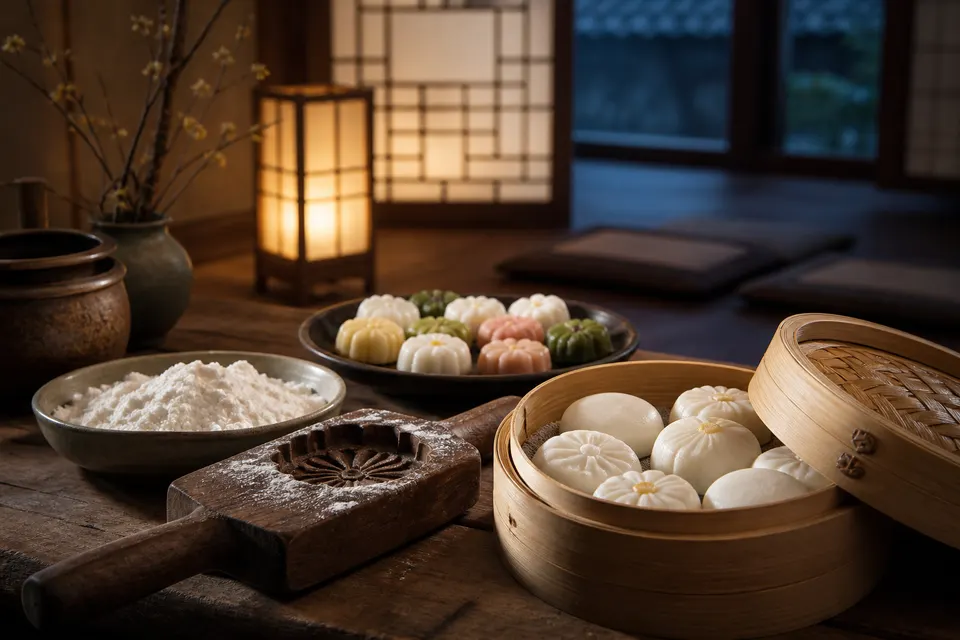
Tools and setting suggest the craft and cultural frame without claiming to show one household's practice. AI-generated editorial illustration; not documentary evidence. visual only; does not depict a specific workshop, museum, household, or documented making process
1 / 2
Original AI-generated editorial illustrations. They clarify categories and context; they do not document a specific museum, family, or ceremony.
Source: 한국민족문화대백과사전 · 떡 (Tteok) · 한국민족문화대백과사전 · 떡박물관 · 한국민족문화대백과사전 · 가래떡 (Garaetteok)
Use occasion as a clue, not a shortcut
A rice cake can carry context through when and where it appears. A seasonal holiday setting may make one form especially recognizable, while an everyday snack, a market purchase, or a family preparation can make another form feel ordinary rather than ceremonial. The Koreanet English video on Chuseok is useful here as broad holiday orientation: it can help a new reader see how food, season, and family practice can meet in one cultural setting. It should not be used as proof that every tteok belongs to Chuseok.
That distinction matters because a familiar holiday example is easy to overgeneralize. The existing Chuseok article in this site already explains how a seasonal food cue can sit inside a wider holiday and household practice. This tteok guide takes the adjacent but different question: how do you read a rice cake before you assign it a story? Treat the occasion as evidence about this instance, not as a universal definition of the category.
For a visitor, that means observation comes before correction. If a host or shopkeeper gives you a name, keep the Korean term visible in your notes. If a display groups cakes by form or use, read the grouping as context. If you only know that something is rice cake, that is a starting point, not a conclusion.
 WATCH ON YOUTUBEChuseok, Korean Thanksgiving Day
Open embedded player
Source: YouTube · Koreanet · Chuseok, Korean Thanksgiving Day
A museum frame changes the question
The tteok museum record is a reminder that food can be collected, named, and interpreted as culture. In a museum frame, the point is not only whether a cake is sweet or chewy. The object can also carry technique, form, memory, and the work of deciding what deserves to be identified. That framing gives English-speaking readers a better route into the subject than a novelty list of colorful snacks.
It also helps separate evidence from atmosphere. The generated images in this article are original contextual illustrations: they show rice cakes, tools, trays, and rooms as visual prompts, not as photographs of a particular museum, household, or ceremony. The museum record and encyclopedia entries do the evidentiary work. The illustrations make the categories easier to see without pretending that one arrangement is the Korean answer.
This is a small but important editorial discipline. When a food is visually distinctive, it is tempting to let the image make the cultural claim. Instead, let the source establish the subject and let the image support the reader's attention. Tteok deserves that separation because its visual variety can invite both curiosity and overconfidence.
A better way to talk about tteok
You can now use a simple three-step reading method. First, name the category: this is tteok, a Korean rice-cake subject. Second, identify the form if the source, menu, host, or display gives you one; garaetteok is an example of a more specific name. Third, ask what setting or occasion matters here. Is the cake being presented as an everyday food, a seasonal cue, a regional specialty, a museum object, or something else? The answer may stay partial, and that is better than a confident invention.
The method is useful in Seoul markets, Korean restaurants, holiday content, museum displays, and conversations about Korean food abroad. It keeps the English translation practical while leaving room for the Korean term to do more work. It also makes comparison easier: you can compare named forms without pretending they all share one texture or role, and you can notice seasonal context without collapsing the entire category into one holiday.
The short version is this: tteok means more than one dessert, but it does not mean one universal cultural message either. Read the form, locate the occasion, and keep regional and household variation in view. That is enough to turn a first encounter with rice cake into a more accurate act of attention.